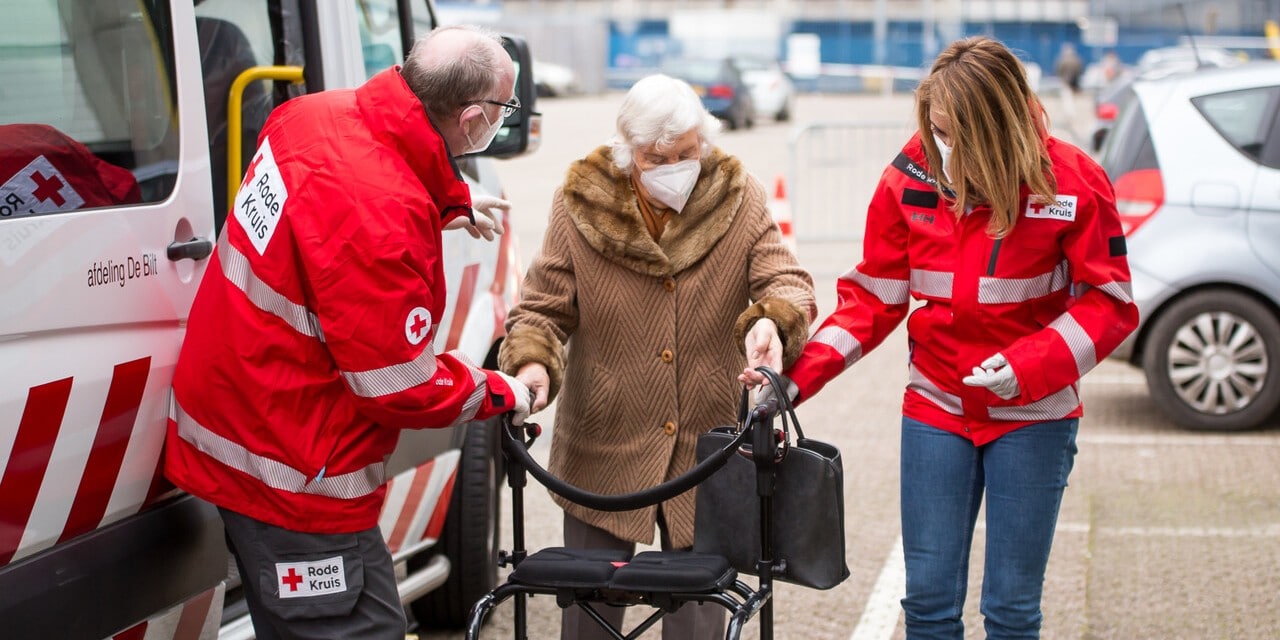
For more than five years, District 35 has worked with the Dutch Red Cross on a digital foundation that helps people find aid, donate and take action faster. Together, we improved the WordPress platform, donation journeys, campaign flows, performance and content management. The result is a flexible, reliable platform that supports the organisation during everyday use and urgent peak moments.
The Dutch Red Cross helps people in moments when clear information and quick action matter most. That makes its digital platform more than a website. It is a way to find help, offer support, donate, volunteer, learn first aid and stay informed during urgent situations.
Together with the digital team of the Dutch Red Cross, we have worked for more than five years on that digital foundation. What started with the renewal of the WordPress platform grew into a broader collaboration across website development, donation journeys, email design, content management, performance and continuous improvement.
The Dutch Red Cross helps people when clear information and quick action matter most. Its digital platform plays an important role in that work. People use it to find help, donate, volunteer, learn first aid and stay informed during urgent situations.
This creates a complex digital environment. The platform serves many audiences, supports different types of action and contains a large amount of content. Over time, it had become harder for visitors to find their way and for internal teams to manage the platform consistently.
The challenge was bigger than replacing an outdated website. The Dutch Red Cross needed a digital foundation that could support its organisational goals, improve access to information and donations, and evolve as needs changed.
We started by mapping the existing digital environment. Together with the digital team of the Dutch Red Cross, we reviewed pages, content, technical modules, search visibility and the different actions visitors needed to complete.
The scale was significant. A 2022 site audit covered 3,240 pages and revealed issues including broken links, inaccessible pages, duplicate content and missing metadata. At the same time, the platform supported a wide range of functions, from donations and newsletters to local departments, first aid information, vacancies and forms.
This research gave us direction. Instead of treating every page or feature as a separate request, we created a roadmap around the needs of visitors and the organisation.
We rebuilt the WordPress platform with three priorities: performance, findability and flexibility.
The platform uses reusable components for different types of content and user journeys. These support donation calls to action, news and press content, first aid information, forms, vacancies, local departments and maps for aid in the Netherlands and abroad.
For visitors, this creates clearer routes to information and action. For internal teams, it creates more control. Content editors can build and update pages within consistent structures without depending on developers for every change.
This balance matters for an organisation like the Dutch Red Cross. The platform needs to give different teams room to communicate, while remaining clear and consistent for the people who use it.
A website is a tool, not the goal. For the Dutch Red Cross, the goal is often immediate: help someone find support, understand what is happening or make a donation.
That is why our collaboration expanded beyond the corporate website. Together, we worked on the donation website and campaign journeys, connecting development, design and marketing around the full path from first contact to action.
For emergency aid mailings, for example, we analysed the journey from inbox to donation. The aim was to help existing contacts understand the urgency and make it easier to contribute. Available data showed that the donation landing page converted best on mobile, making the experience across email and website an important part of the challenge.
We translated these insights into responsive email designs, clearer visual hierarchy and practical recommendations for reducing friction. Instead of optimising the email in isolation, we looked at the complete journey.
Digital performance matters every day. During an emergency appeal, it becomes critical.
The Dutch Red Cross needs to respond quickly when events create an urgent need for information and donations. At those moments, traffic can rise sharply. The platform needs to remain fast, reliable and easy to use.
Performance was therefore part of the foundation, not a final technical check. The rebuilt platform achieved a Web.dev performance score above 95%. The work also focused on search visibility, technical quality and a structure that could support future changes.
The same principle guided the wider collaboration. We designed and developed the corporate and donation websites with attention to customer journeys, marketing automation and performance during peak moments.
Over more than five years, the collaboration grew from rebuilding a website into continuously improving a digital platform around the goals of the Dutch Red Cross.
Together, we created:
The result is not one finished website. It is a stronger digital foundation that helps the Dutch Red Cross communicate, respond and improve. As the organisation, its audiences and the need for aid change, we continue to improve the platform together.

.jpg)


.jpg)